The HOA Board's Guide to a Community-Wide Repaint That Doesn't Blow Up
If you're on an HOA board sitting on three bids for a community-wide repaint, the biggest risk in front of you isn't picking the wrong color. It's picking a contractor who can paint 60 buildings just fine but can't run a project across 400 units, 800 residents, and a phased schedule without something blowing up in a homeowner meeting. Large repaints fail on coordination, not paint quality. Here's what a board should require before signing.
Require an Itemized Scope, Not a Bottom Line
The single most common cause of dispute during a community repaint is scope ambiguity: 'you said you'd paint the fascia' vs. 'that wasn't in the bid.' A proposal that only shows a dollar total at the bottom is not comparable to anything. Require every bidder to break the scope into named surfaces (stucco body, fascia, soffits, trim, doors, garage doors, iron railings, common-area walls, mailbox kiosks) and specify what happens on each one: prep steps, primer, coats, product, and color.
Require a Written Phasing Plan
You cannot paint 60 buildings at once without chaos. A serious contractor will submit a phasing plan showing which buildings or streets are painted in which weeks, in what order, and roughly how many crew members will be onsite each week. Ask for this in writing before signing. Phasing by cluster (a group of buildings that share parking and access) is almost always cleaner than phasing by street, because it lets residents park and enter their homes in one predictable pattern.
Require Insurance Certificates and License Numbers
This is board-fiduciary basics but it still gets skipped. Before signing, get:
- A current certificate of insurance naming the HOA as additional insured, general liability at minimum.
- Workers' compensation certificate for every crew member who will be onsite.
- Current contractor license number from the state (in Nevada, a C-4 painting license) that you can verify with the state contractors board.
- Written workmanship warranty language: the actual warranty document, not a verbal assurance.
Color Documentation Is Not Optional
The HOA's design guidelines usually specify approved color palettes. The proposal should list the exact manufacturer, product line, and color code for every surface: body, trim, doors, and accents. If you accept 'match existing' as a spec, you're accepting whatever the crew eyeballs on day one. Get it in writing at bid time, and get physical color chips signed off by the board before the first can opens.
Resident Communication Is the Make-or-Break Factor
This is where most community repaints actually collapse. A resident wakes up, walks to their car, finds it blocked by a lift, and calls the property manager furious. Multiply that by 400 units. The fix is boring and cheap: relentless communication built into the phasing plan.
- Community-wide notice 2–4 weeks before start, with the full phasing schedule.
- Building-specific notice 7 days before crews arrive at that building.
- Unit-specific door-hanger notice 24–48 hours before work near a specific unit.
- Bilingual English/Spanish notices in any community with Spanish-speaking residents.
- A single contact number that reaches a human during work hours, not a voicemail.
- Site walk-throughs each morning so the crew knows which cars will be moved and which entry points are active.
How to Compare Bids Beyond the Bottom Line
Once you have three itemized proposals side by side, compare on these axes before the total:
- Prep specification: is it identical across bids? (Usually not.)
- Coats: one or two on each surface?
- Product tier: same manufacturer and line, or is one bid using a builder-grade product to hit a lower number?
- Warranty length and callback terms.
- Phasing plan detail and total timeline.
- Communication plan: bilingual notices, unit-level scheduling, and contact protocol.
- References from similar-scale HOA projects, not one-off homes.
When you normalize the scope across bids, the price gap usually shrinks or reverses. The cheapest bid before normalization is often the most expensive one after, because it's specifying less prep, one coat, or a lower-grade product.
Questions to Ask Every Contractor Before Signing
- How many communities of similar size have you painted? Can we call two of them?
- Who is the on-site project manager for our community, and how do we reach them?
- How do you handle a resident complaint? Walk us through the exact process.
- What's your bilingual communication protocol?
- What happens if weather pushes the schedule? How do you re-notice residents?
- What's your workmanship warranty (in writing), and how have you handled callbacks on past HOA projects?
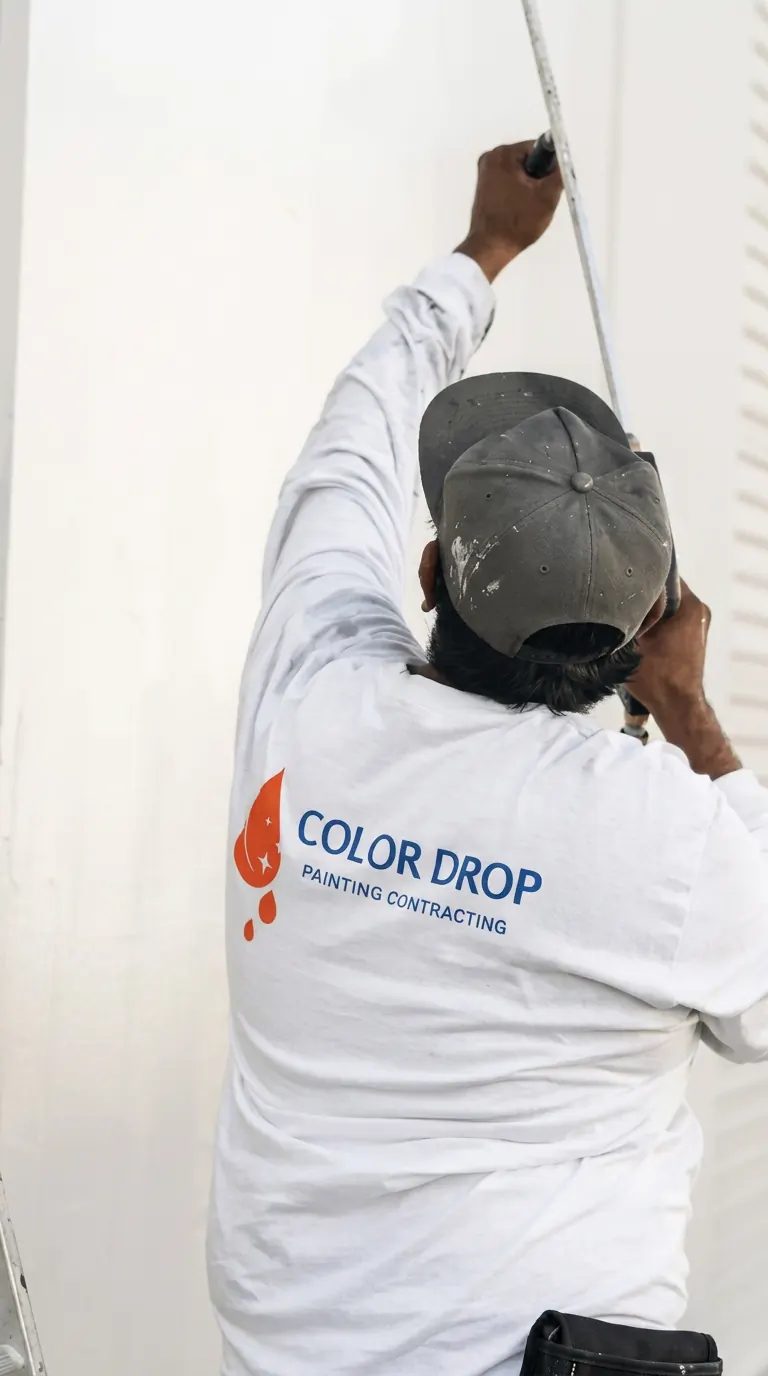
The team at Color Drop Painting has taken communities of every size through repaint, including a recent 1000+ home community project across Nevada. Board-ready proposals, bilingual crews, phased scheduling, and a written warranty on every unit. If your board is scoping a repaint, request a free on-site walk and proposal at request a free estimate and our team will follow up with you.