

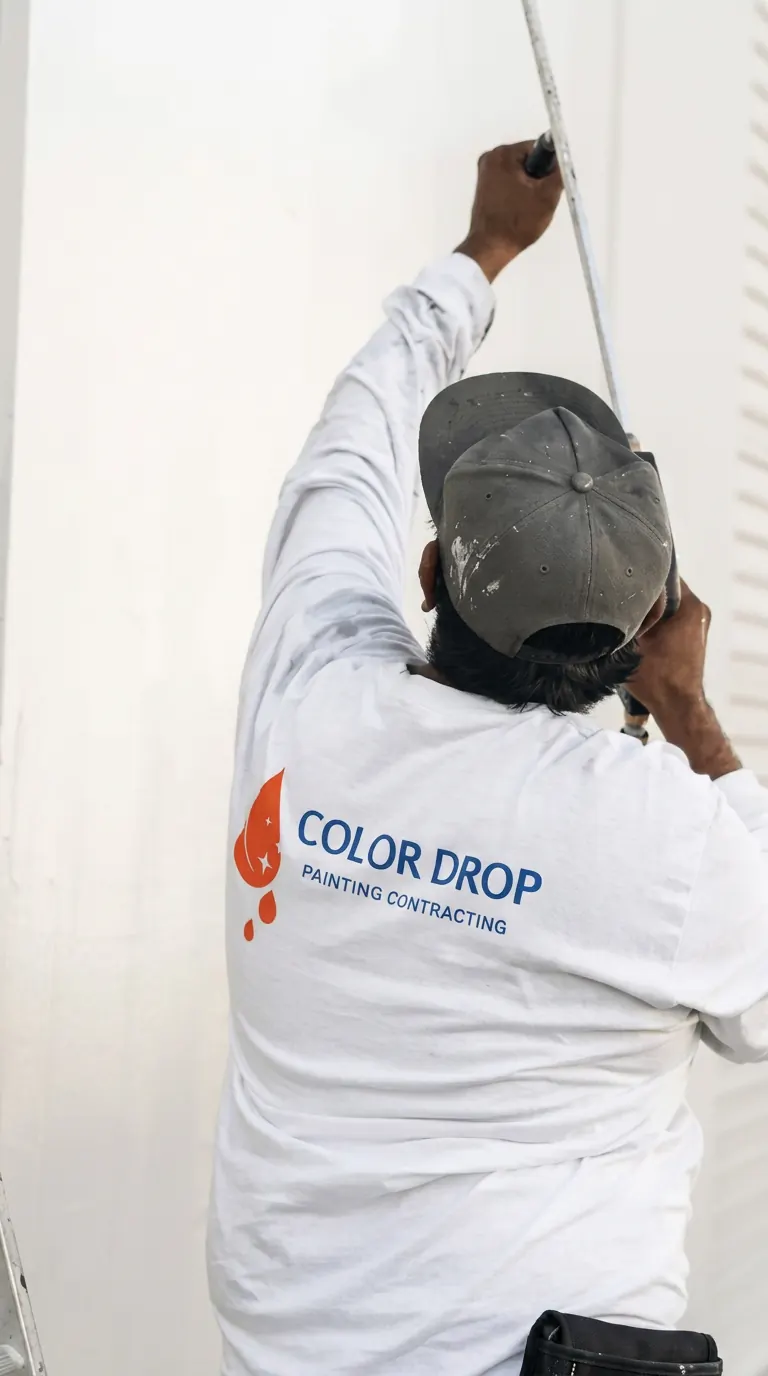
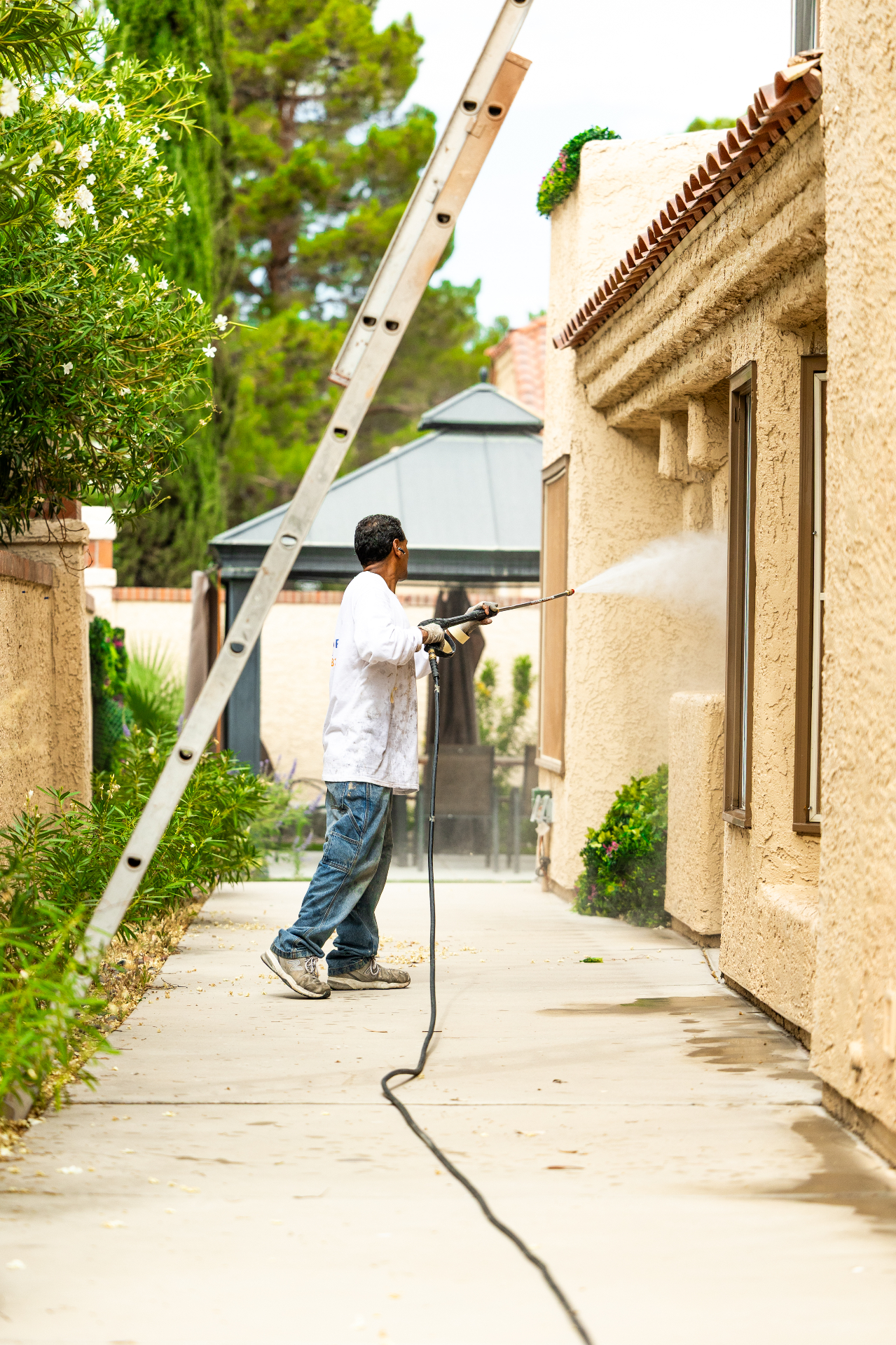
Pressure washing
Remove chalk, dust, and loose material before coating.

Stucco, siding, eaves, garage doors, and shutters coated after real prep, because in this climate the prep is what determines how long the paint lasts.
Licensed NV C-4 #0092296 · UT #14220959-5501 · Serving Nevada & Utah
Exterior pricing comes down to measured wall and trim square footage, the condition of the stucco, how much surface repair and prep is needed, and the number of stories. We measure the home, write the prep and coating scope line by line, and give you one fixed price before any work starts — no per-square-foot guess over the phone.
In most of the country exterior paint fails from moisture. In southern Nevada and southern Utah it fails from UV and heat cycling. South and west elevations chalk, fade, and lose their binder years before the shaded sides do, which is why so many houses here have one wall that looks a decade older than the rest.
The other failure mode is prep. Coating over chalky, dusty, unwashed stucco means the new paint is only as attached as the powder underneath it. It looks great for a season and then peels in sheets.
Prep is most of the labor on an exterior job and almost all of the difference in how long it lasts. We wash first, repair second, prime third, and only then coat. If you are evaluating an existing coating, start with our guide to [painting over old exterior paint](/blog/paint-over-old-exterior-paint).
Remove chalk, dust, and loose material before coating.

Fill hairline cracks and patch stucco where the scope requires it.
Seal window, door, and trim joints before finish coats.
Match the base coat to bare, repaired, or chalky surfaces.
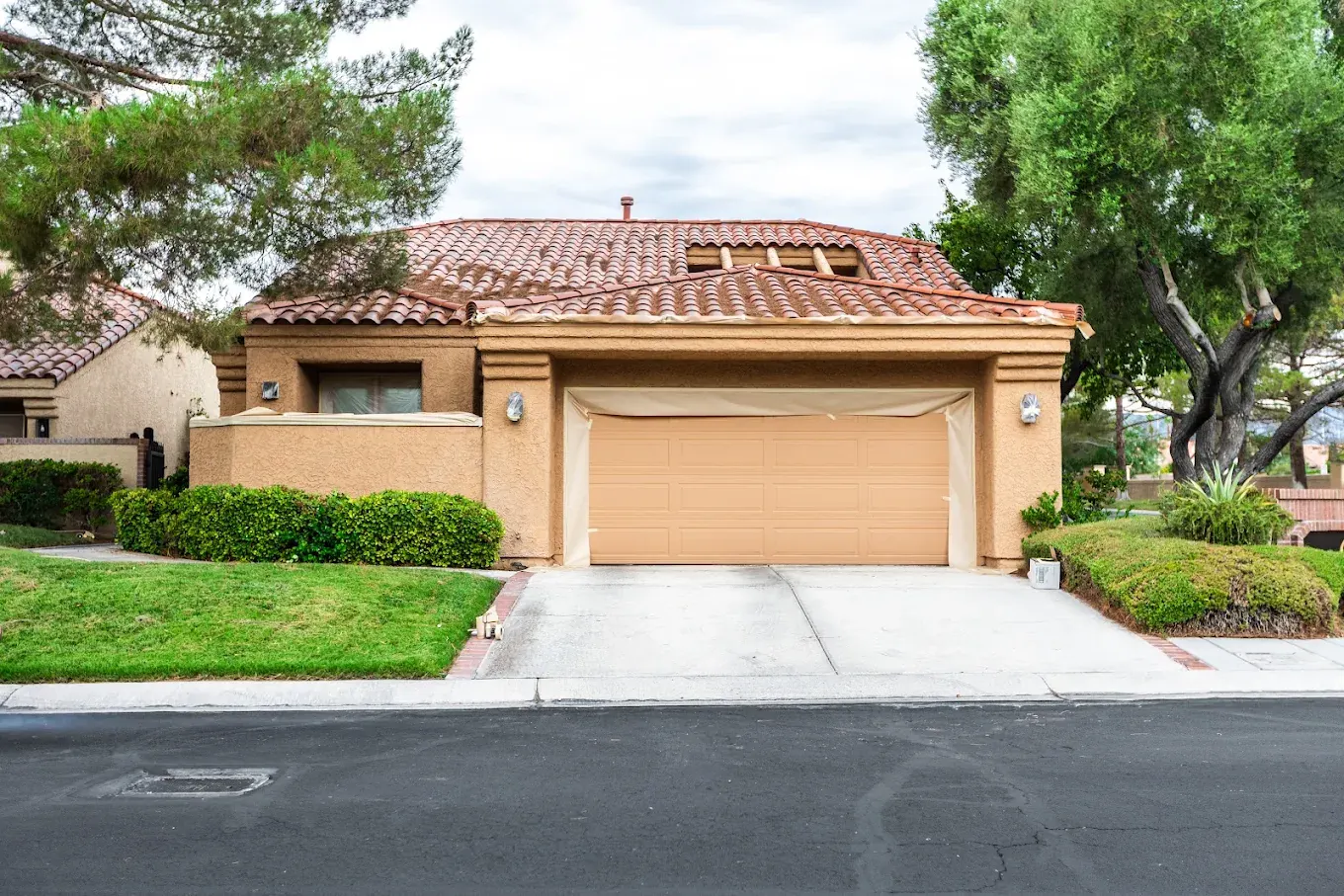
Protect stone, roofing, windows, landscaping, and hardscape.
Select coat count for each elevation based on exposure and condition.
Front doors, garage doors, and shutters take the worst of the sun and are usually the first thing that makes a house look tired. They also happen to be the cheapest single change to the curb appeal of a property.
These are often quoted as their own small scope. If your body and trim are still holding up, refreshing just the doors and shutters can be a fraction of a full repaint.
Plenty of the communities we work in have an approved palette and an application process. We will work from your community's approved color list and give you what the board or management company needs on paper, so your repaint does not turn into a violation letter.
We look at each side separately. The south wall usually needs more work than the north one, and the estimate should say so.
Surfaces are cleaned, cracks and stucco damage are addressed, joints are re-caulked, and bare or chalky areas get primed.
Body, trim, and accents coated per the written build, then a walk of the full perimeter with you before we pull off site.
We do not publish a price list, because a real number depends on your property. These are the things that actually change it, and every one of them shows up as a line item on your estimate.
Height drives access equipment and labor as much as surface area does.
Chalking, peeling, and cracked stucco add washing, repair, and priming hours before finish coats.
Hairline cracks, spalled stucco, or damaged fascia are quoted as their own repair line items.
Body, trim, accent, doors, and shutters each add cut-in time and masking.
Tight side yards, pools, mature landscaping, and slopes all change how the crew has to work.
Higher-grade exterior and elastomeric products cost more up front and perform differently in this climate.
You approve the scope in writing before work starts. If an item is not listed on the estimate, it is not included in the price.
Free and itemized by elevation, prep, and product. No obligation.
Written warranty on every project.