
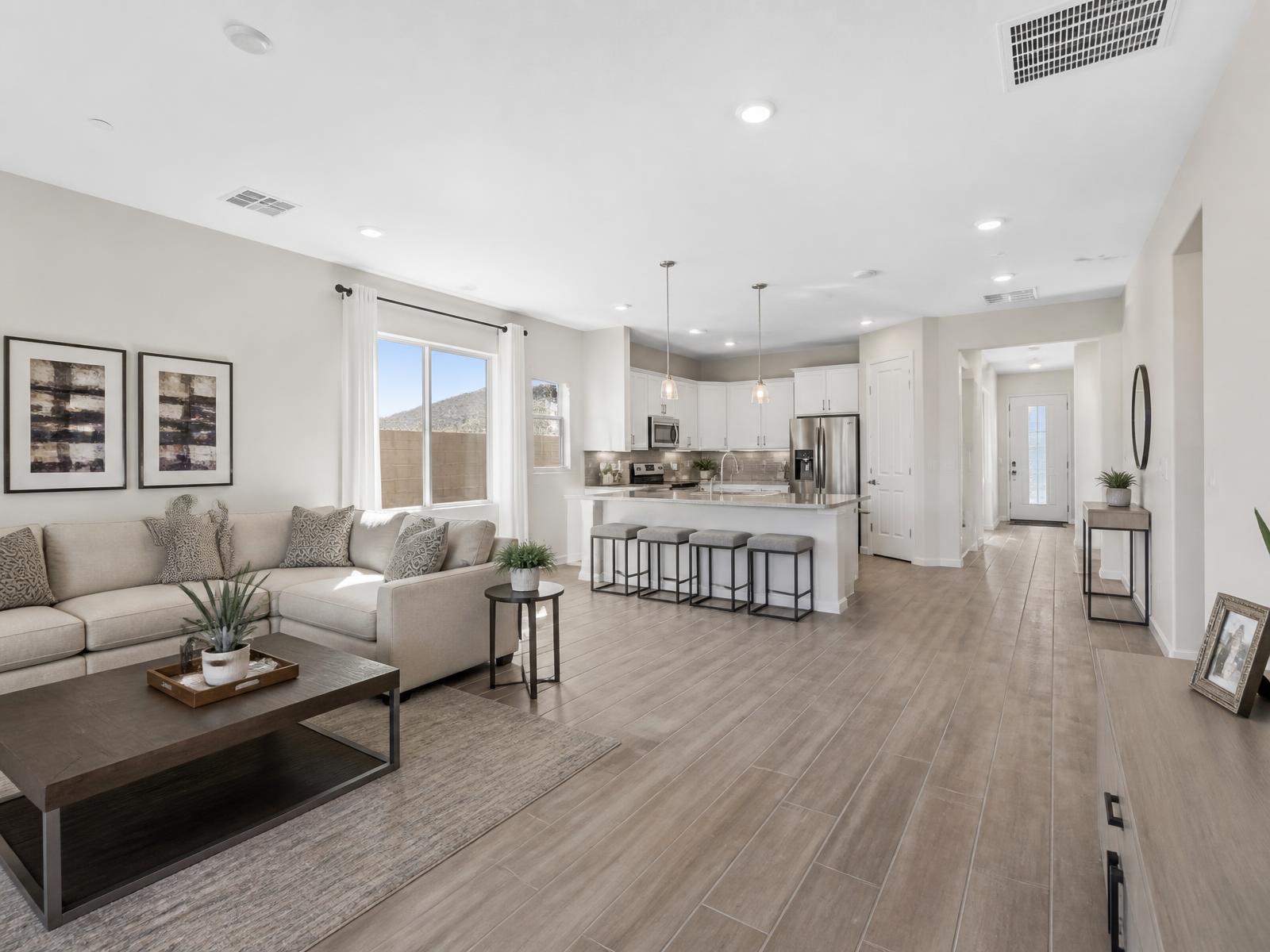
Walls
full-room repaints or full color changes

and communities across Nevada and Utah
Walls, ceilings, doors, and trim painted inside an occupied home without turning your life upside down. Everything gets covered, patched, and cleaned before we leave each day.
Licensed NV C-4 #0092296 · UT #14220959-5501 · Serving Nevada & Utah
Interior pricing is driven by the number of rooms and their wall height, whether ceilings, doors and trim are included, the amount of patching required, and how many coats the color change needs. We walk the home, list every surface on the estimate, and hold that price — anything not written down is not in the job.
Exterior paint gets seen from the street. Interior paint gets seen from the couch, in raking afternoon light, six inches from the trim. Roller stipple on a ceiling, a wavy cut line at the wall-to-ceiling joint, or a door sprayed while still on its hinges are the things you notice every day afterward.
The other half of the job is that you still live there while it happens. Furniture has to go somewhere, floors have to survive, and the house has to be usable at 6 p.m. Interior painting done badly is less about the paint and more about the disruption.
We cover every interior surface as its own line item on your estimate, not a single lump "paint the house" number.
full-room repaints or full color changes
standard flat-finish ceiling painting
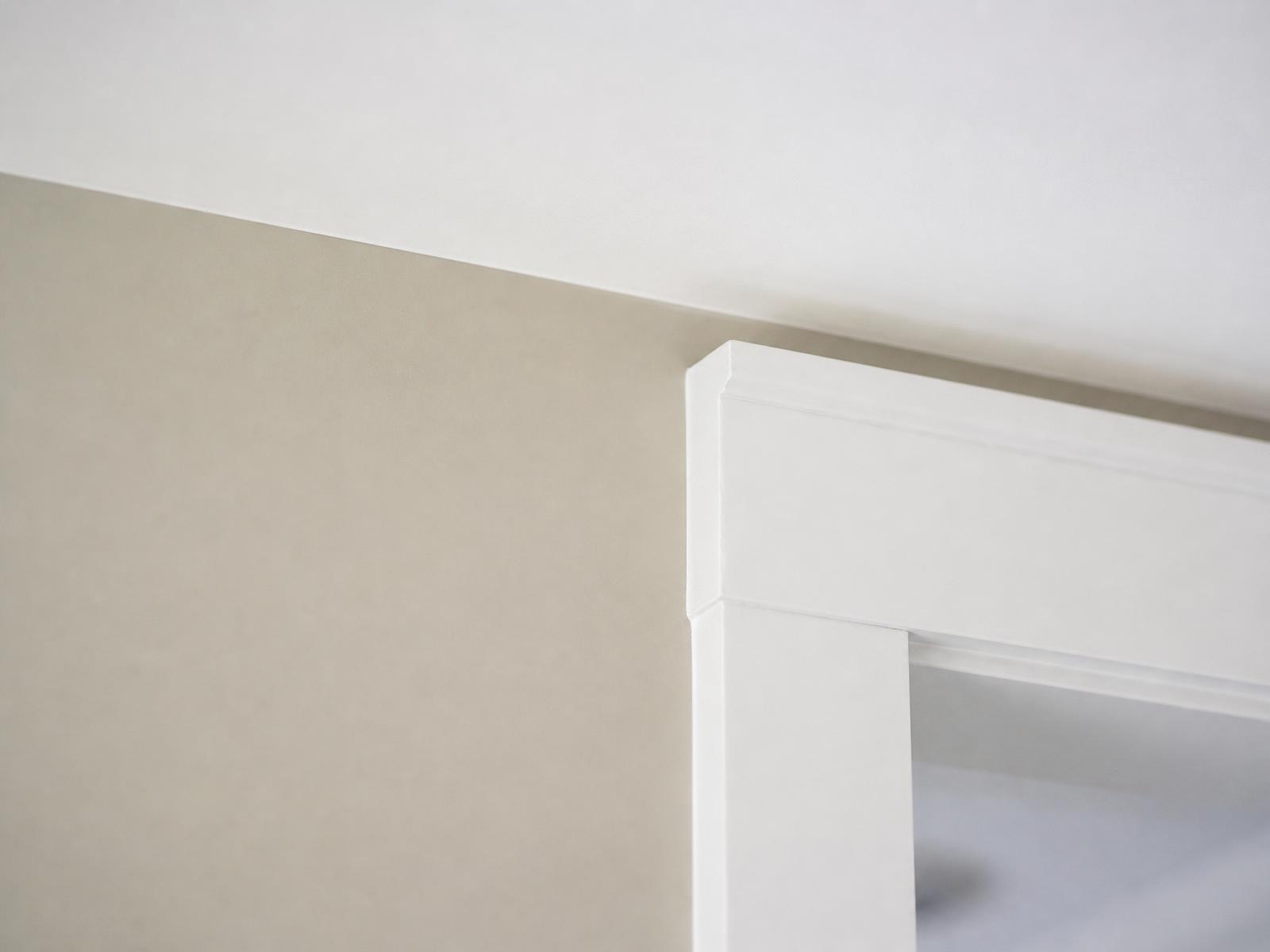
deglossed, sanded, caulked, and refinished
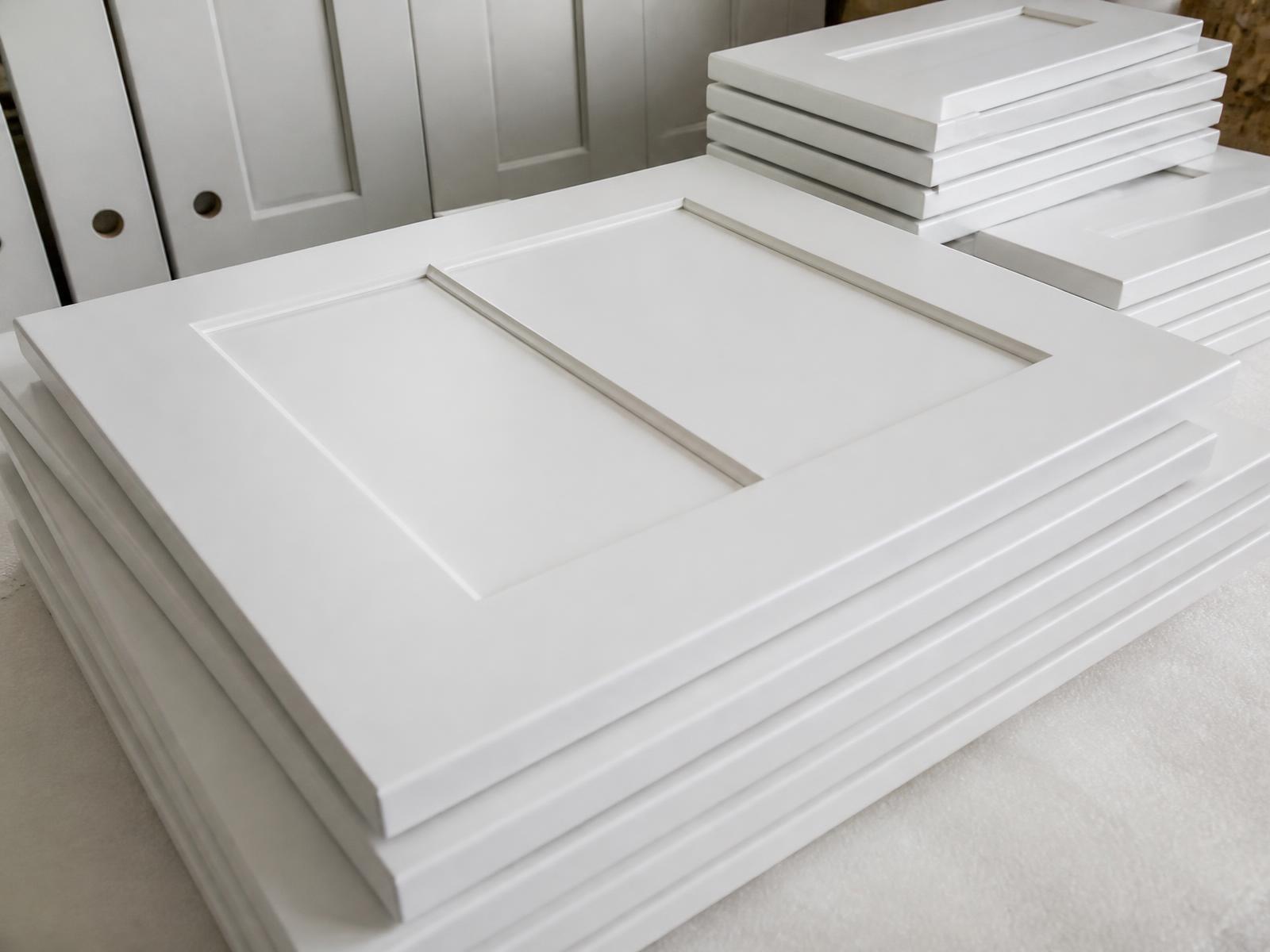
interior doors finished on faces and edges, not just fronts
bold or contrasting single-wall color changes as a standalone add-on
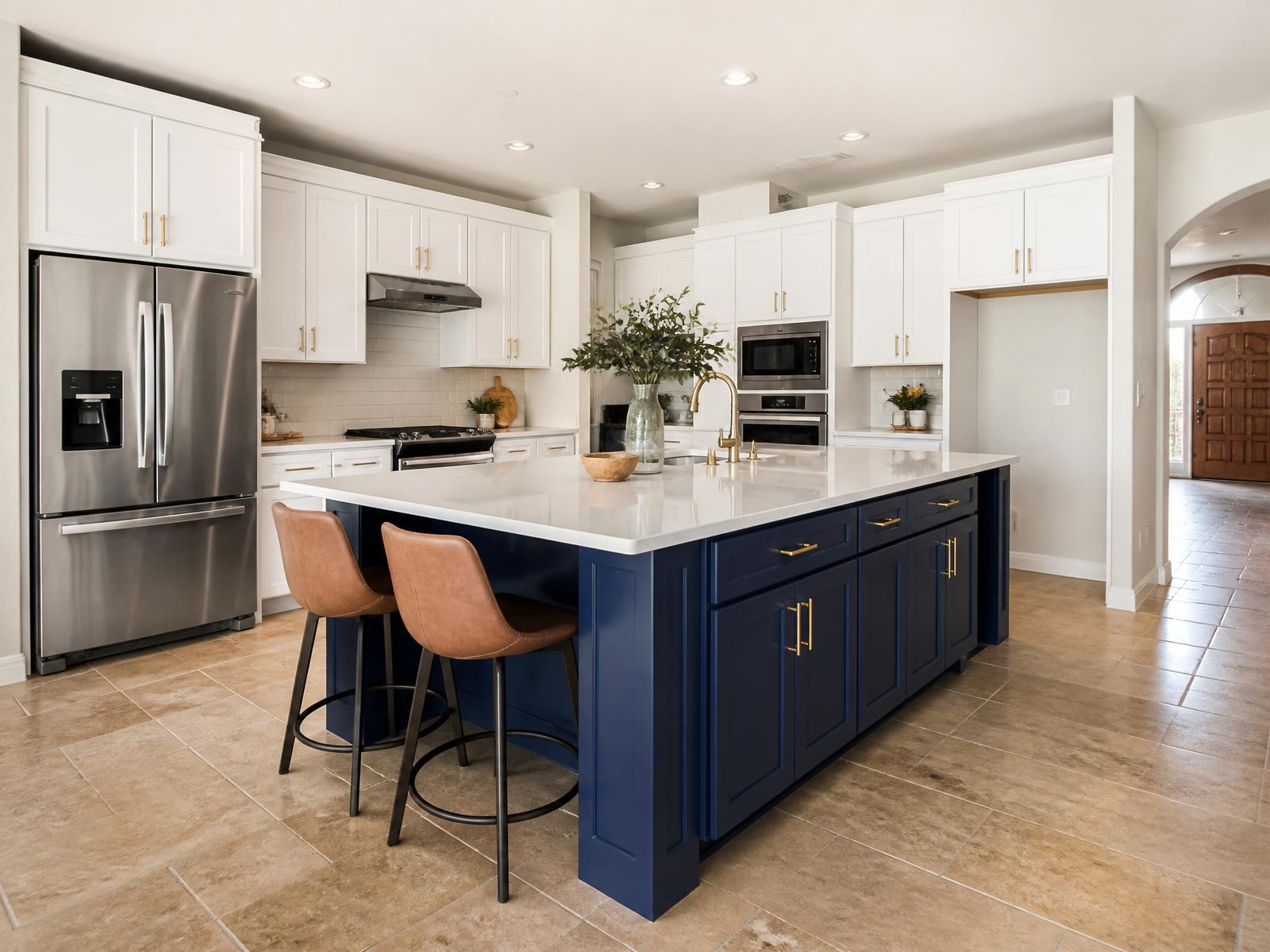
full cabinet painting and refinishing is its own dedicated service
Living rooms, bedrooms, kitchens, bathrooms, hallways, home offices, and dining rooms — each gets the same protect-prep-paint approach, whether it's one room or the whole house.
We work room by room rather than opening the whole house at once, so you always have finished space to retreat to. Floors get covered, fixtures and hardware get masked or removed, and everything gets put back at the end of each day.
Doors, casing, baseboard, and window trim are their own discipline, and they are where a cheap interior job gives itself away. Trim shows every ridge, every skipped sanding pass, and every run at the bottom of a door edge.
We degloss and sand existing enamel so the new coat actually bonds, fill nail holes and open joints in casing, and re-caulk where trim meets wall. Doors are painted with the edges finished, not just the faces, and we keep them from sticking to the jamb while the enamel cures.
Trim and doors can be quoted as their own project if the walls are still in good shape. Plenty of homes only need the woodwork refreshed, and that is a far smaller line item than a whole-house repaint.
Sheen matters as much as color. Here's what actually holds up where:
hides wall imperfections best; good for low-traffic bedrooms and ceilings
the standard living-area compromise between hideability and cleanability
a step up in durability for hallways and kids' rooms
trim, doors, and moisture-prone bathrooms
Picking interior color from a one-inch chip in a store is how people end up repainting twice. Nevada and Utah light is intense, and a cool white can read blue on a north wall and yellow on a south one.
We will bring samples, put them on your actual walls, and look at them at different times of day before anything is ordered. Sheen matters as much as color: flat hides wall imperfection but scrubs poorly, eggshell is the usual living-area compromise, and satin or semi-gloss belongs on trim and in bathrooms.
The final product, color, and sheen for every surface is written into your estimate so there is no ambiguity about what is going on the wall.
Color ConsultationWe walk every room you want painted, note ceilings, trim, closets, and any repairs, and write it down as separate line items instead of one lump number.
Floors and furniture covered, holes filled and sanded, stains and patches spot-primed. This is the part that decides how the finish looks.
Coats applied per the agreed build, then a walkthrough with you under normal lighting. Anything you flag gets fixed before we call it done.
We don't publish a flat price list, because a 1-bedroom condo and a 5-bedroom home with vaulted ceilings aren't the same job. Here's what actually drives your number:
Square footage of wall, whether ceilings are included, and how many closets and small rooms are in the count.
Patching, drywall repair, texture matching, and stain blocking all add labor before a drop of finish coat goes on.
Going dark to light, or covering a strong color, usually needs primer plus two coats instead of one.
Woodwork is slow, detailed work. Adding doors and baseboard to a wall-only scope changes the number meaningfully.
Moving and returning furniture is available as an add-on line item rather than folded silently into the price.
Washable, higher-durability interior lines cost more per gallon and hold up better in hallways, kids' rooms, and rentals.
For a general sense of what interior painting costs, including per-square-foot ranges and room-by-room examples, see our interior painting cost guide.
Most of our interior work is in the Las Vegas valley — including Henderson and Summerlin — with the same crews serving St. George and Santa Clara, Utah. See what's included for your area:
Residential interior painting across Las Vegas, Henderson, and Summerlin.
Not seeing your area? See our full Nevada service area, Utah service area, or get a free estimate.
Nevada C-4 #0092296 and Utah #14220959-5501.
Every project is backed by a written 2-year workmanship warranty.
Free and itemized, with every surface listed instead of one lump-sum guess.
No subcontracted crews. The team that starts your home finishes it.
You approve the scope in writing before work starts. If an item is not listed on the estimate, it is not included in the price.
Free, no obligation, and itemized room by room. Takes about two minutes to request.
Written warranty on every project.