
Can You Paint Over Old Exterior Paint?
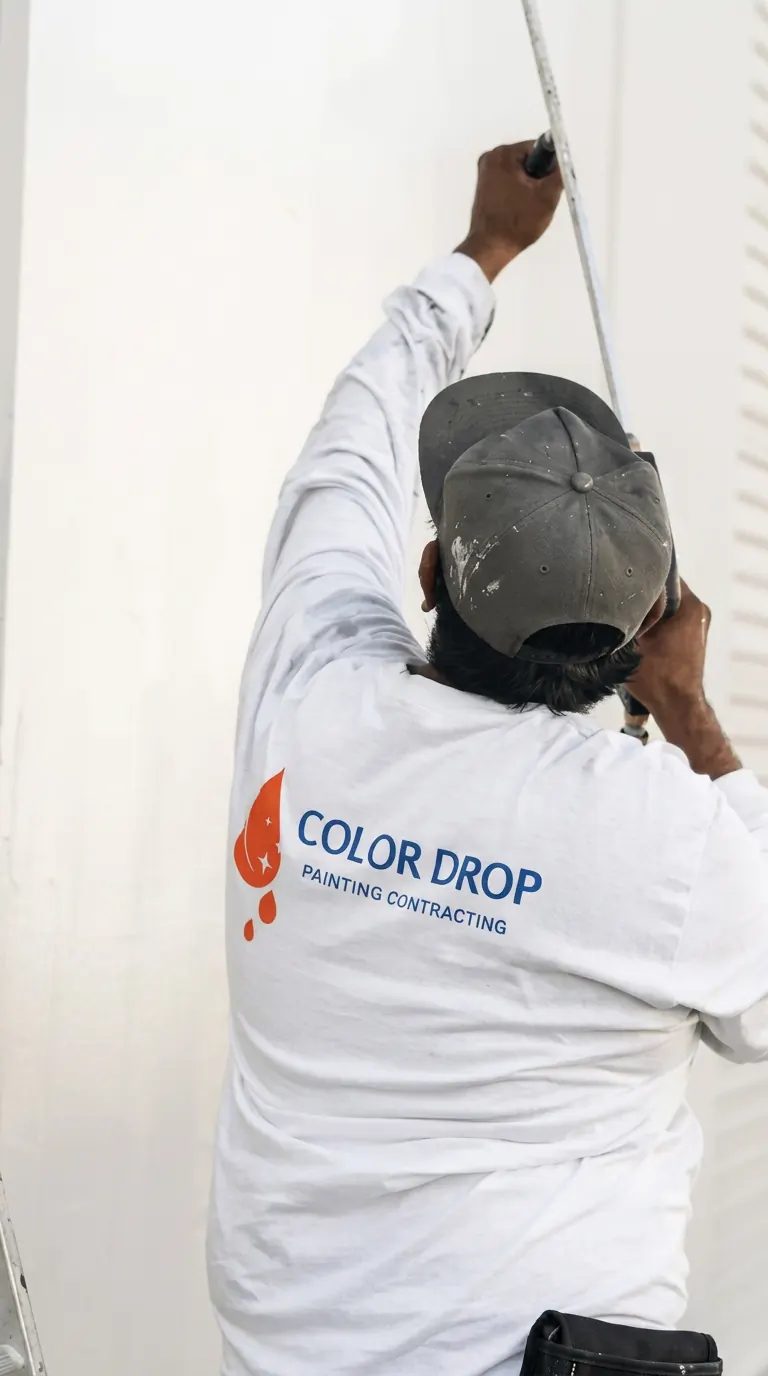
Yes, you can usually paint over old exterior paint, as long as it's sound, clean, and firmly attached to the wall. You don't have to strip a house down to bare stucco or wood to repaint it. Sound old paint makes a perfectly good base for the new coat. What you can't do is cover paint that's already failing. Peeling, flaking, or chalky paint has to be dealt with first, because new paint only holds as well as the layer it's sitting on.
In the desert, the real question is what the sun has done to your existing coat. Years of UV break the surface of exterior paint down into a fine powder, and that powder is the most common reason a fresh repaint peels within a couple of summers. The four checks below show you whether your old paint is ready for a new coat, and what to do if it isn't.
Yes, If the Old Paint Passes These Four Checks
You can paint over old exterior paint when it passes an adhesion test, a chalk test, a visual scan for peeling, and a moisture check. Each one takes a few minutes.
The adhesion test. Use a utility knife to cut a small X through the paint on an inconspicuous spot. Press a strip of strong tape over it, rub it down, and rip it off fast. If the tape comes away clean or with only a few specks, the paint is well bonded. If flakes or sheets of paint come off with the tape, that coating isn't holding, and those areas need to be scraped back. Test several spots, especially on the sunniest walls.
The chalk test. Rub a dark cloth, or the palm of your hand, firmly across a south- or west-facing wall. A light dusting is normal on older paint and washes off. If your hand comes back coated in colored powder, the paint surface has broken down. New paint rolled onto chalk bonds to the powder, not the wall. This is exactly why exterior paint breaks down in the desert: UV degrades the binder at the surface faster here than almost anywhere else.
The peeling scan. Walk every side of the house and look closely at eaves, fascia, the bottom of walls, around windows and doors, and anywhere near sprinklers. Note any peeling, bubbling, flaking, or cracking and how widespread it is. A few spots can be prepped. Failure across most of a wall is a different job.
The moisture check. Look for water stains, soft or spongy wood on fascia and trim, bubbling near hose bibs, and white crusty deposits (efflorescence) on block walls or stucco. Moisture behind a coating will push new paint off just as it did the old paint, so the water source has to be fixed first.
If the paint passes all four, you can prep and repaint over it. If it fails one, the guide below tells you what that failure means.
Can I Paint Over This? A Condition-by-Condition Guide
Whether you can paint over old exterior paint depends on its condition, and each condition has a specific fix.
| What you find | Paint over it? | What to do first |
|---|---|---|
| Sound, firmly attached paint | Yes | Wash, let dry, repaint |
| Light chalk that washes off | Yes, after washing | Wash, let dry, retest |
| Heavy chalk that keeps coming back | Not directly | Wash, then prime with a primer made for chalky surfaces |
| Rough or uneven old paint | After prep | Scrape and sand the rough areas smooth |
| Peeling paint | No | Scrape to a firm edge, feather-sand, spot-prime |
| Flaking paint | No | Scrape all loose material, sand, spot-prime |
| Bubbling or blistering | No | Find the cause (heat or moisture), remove the failed paint, fix the source |
| Cracking or "alligator" pattern | No | Remove the failed layers; the paint film has lost flexibility |
| Bare wood or bare metal | After priming | Prime with a primer made for that material |
| Patched or repaired areas | After priming | Spot-prime the repairs so they don't show through |
| Dirt, cobwebs, or mildew | After cleaning | Wash and treat mildew, then let dry |
| Efflorescence on block or stucco | After cleaning and fixing moisture | Remove the deposits, fix the water source, use masonry primer |
If you'd rather work through it as a quick decision:
- Is the old paint firmly attached? If not, scrape off everything loose before going further.
- Is the surface clean and chalk-free? If not, wash it, let it dry, and do the chalk test again.
- Are there bare, repaired, or stained spots? If so, spot-prime them.
- Is the old coating compatible with the new paint? If you're unsure, identify it first (see below). Then apply two coats.
When You Shouldn't Paint Directly Over Old Paint
Don't paint straight over old exterior paint when the coating is failing, when there's moisture behind it, or when it may contain lead.
Widespread peeling or cracking. When most of a wall is failing, spot repairs turn into a patchwork. That surface may need to be taken down much further before repainting.
An active moisture problem. Leaks at windows and roof lines, sprinklers hitting walls, and damaged stucco let water get behind the paint. Paint over it and the new coat fails in the same places.
Chalk that won't wash off. Some old coatings are so degraded that washing doesn't get you to a firm surface. These need a specialized primer before any topcoat, and that has to be planned into the job.
Incompatible coatings. Putting the wrong paint over an existing coat, most commonly water-based paint over old oil-based paint without the right prep, is a guaranteed adhesion failure.
Homes built before 1978. Paint on older homes may contain lead. Test it before sanding or scraping. The EPA's Renovation, Repair and Painting (RRP) rule requires contractors who disturb paint in pre-1978 homes to be certified in lead-safe work practices.
Can You Paint Over Peeling Exterior Paint?
No, you shouldn't paint over peeling exterior paint. The peeling layer is already letting go of the wall, and new paint bonds to that failing layer instead of the surface underneath. The fresh coat may look fine for a few months, but when the old paint lifts, it takes the new paint with it.
Peeling areas need to be scraped back until the scraper stops lifting paint, then sanded so the edge between bare and painted areas is smooth. After that, the bare spots get primed before the topcoat. It also pays to ask why the paint peeled in the first place. Peeling concentrated at the bottom of walls, around windows, or on fascia often points to moisture, and that needs fixing, or the new paint will peel in the same spots.
Do You Have to Remove All the Old Paint?
No, you don't have to remove all the old paint in most cases. Only loose, peeling, or failing paint needs to come off. Sound paint that passes the adhesion test stays on and becomes the base for the new coat.
| Surface preparation (most repaints) | Full paint removal (the exception) |
|---|---|
| Wash, scrape loose spots, sand edges, spot-prime, repaint | Strip coating back to the substrate |
| Right when old paint is mostly well bonded | Right when failure covers most of a surface |
| Keeps sound paint as the base | Needed when built-up layers crack or coatings are incompatible |
Full stripping is slow and expensive, and it isn't a mark of a better paint job. A careful prep on a sound surface outlasts a rushed strip-and-paint every time.
How to Prepare Old Exterior Paint for Repainting
Preparing old exterior paint takes eight steps, and most of the repaint's lifespan is decided here.
- Inspect each side of the house separately. South- and west-facing walls usually need more prep than north walls.
- Wash the surfaces. Remove dirt, chalk, and cobwebs, matching the pressure to the surface so you don't damage stucco or soft wood. See how pressure washing before painting fits into the prep.
- Treat mildew and efflorescence where they appear, and let everything dry fully.
- Scrape loose paint until it stops lifting.
- Sand scraped edges and glossy areas so the new coat has something to grip and the transitions don't show.
- Repair and caulk. Fill holes, patch damaged areas, and re-caulk gaps at trim, windows, and doors with a paintable exterior caulk.
- Spot-prime bare substrate, repairs, and stains with a primer suited to each material.
- Apply two coats of an exterior paint compatible with the existing coating.
For how a professional crew handles each of those on a stucco home, our full exterior prep sequence is laid out on the exterior painting page.
Do You Need to Sand Old Exterior Paint?
You don't need to sand an entire house before repainting. Sanding is only needed in specific spots:
- Edges around scraped areas, so the old paint's edge doesn't telegraph through the new coat
- Glossy surfaces, such as enameled trim, front doors, and previously painted metal, where the new coat needs a dull surface to grip
- Rough or uneven patches left by old drips, bubbles, or repairs
Stucco is the exception. It's washed and repaired, not sanded. Sanding textured stucco damages the finish without improving adhesion.
Do You Need Primer Over Old Exterior Paint?
You don't always need primer over old exterior paint. Clean, sound paint of a compatible type can take a new topcoat directly, especially when the new color is close to the old one. Primer becomes necessary when the surface underneath can't give the topcoat a reliable bond.
Use primer on:
- Bare wood, bare metal, and new stucco or block patches
- Repaired areas and anywhere filler was used
- Water stains and other discoloration that could bleed through
- Heavily chalked surfaces that remain chalky after washing
- Glossy paint, or oil-based paint you're covering with water-based paint
- Big color changes, especially dark to light
- Masonry that calls for a masonry primer or sealer
Should primer completely cover the old paint? Primer should be applied evenly, with no skipped patches, wherever you use it. It doesn't need to hide the old color completely, though. The topcoat does the hiding. On a big color change, having the primer tinted toward the new color cuts down on the coats needed.
What Paint Can You Put Over Old Exterior Paint?
The best paint for covering old exterior paint is one that's compatible with the existing coating. For most homes, that means a quality 100% acrylic exterior paint over sound acrylic or latex paint.
Start by finding out what's on the wall. Rub a cotton ball dampened with rubbing alcohol on an inconspicuous spot. If paint softens and comes off on the cotton, it's latex or acrylic. If nothing happens, it's likely oil-based.
- Acrylic or latex over sound acrylic or latex: the most straightforward repaint. Clean and apply the new coat.
- Water-based paint over old oil-based paint: possible, but only after deglossing or sanding and a bonding primer. Without that, it peels.
- Oil-based paint over latex: generally not recommended on exteriors, because the more rigid oil film doesn't move with the flexible latex underneath.
- Masonry and stucco: use coatings rated for masonry, and elastomeric coatings only where the surface is sound and dry.
Whatever you choose, follow the product's technical data sheet for surface prep, temperature range, and recoat times.
Painting Over Different Exterior Surfaces
Each exterior surface has its own weak spot when you repaint over old paint. Most Las Vegas homes combine several of them.
| Surface | Main consideration | Prep note |
|---|---|---|
| Stucco | Hairline cracks and chalk on sun-facing walls | Wash, repair cracks and patches to match texture, masonry primer on repairs |
| Block walls (CMU) | Efflorescence and sprinkler staining | Remove deposits, fix water sources, masonry primer on bare block |
| Wood fascia and trim | Sun-split wood and dry rot | Replace rotted sections, sand, prime bare wood |
| Metal (garage doors, railings, gates) | Rust and slick factory finishes | Remove rust, scuff sand, use a rust-inhibiting or bonding primer |
| Aluminum siding | Heavy chalking | Wash thoroughly, prime if chalk persists |
| Brick and stone veneer | Often better left unpainted | Masonry primer and coating only if already painted; otherwise mask |
Cracked stucco has to be repaired before any coat of paint will hold. Not sure whether yours is cosmetic? Here's how to tell which stucco cracks are normal. If your stucco has never been painted, read whether painting over stucco is a good idea before you start. If your walls have more than a few hairline cracks, stucco repair and painting is its own scope that has to come first.
What Causes New Exterior Paint to Peel?
New exterior paint almost always peels because of what's underneath it, not the new paint itself. The chain runs from a failing old coat, through inadequate prep, to poor adhesion and early failure.
Chalk left on the surface. The most common desert cause: new paint bonds to powder instead of the wall.
Painting over loose paint. The old layer lifts and takes the new paint with it.
Damp surfaces. Painting too soon after washing, or over a wall that's wet behind the surface, traps moisture under the film.
Moisture behind the coating. Leaks, irrigation, or cracked stucco keep pushing water out through the paint.
Incompatible coatings. Water-based paint over unprepared oil-based paint, or oil-based paint over flexible latex, fails at the bond line.
Painting outside the label's limits. Surfaces that are too hot, too cold, or in direct midday sun can skin over before the paint bonds properly.
Best Conditions for Painting Over Old Exterior Paint
Paint over old exterior paint when the surface is dry, clean, and within the paint's temperature range. In southern Nevada, that usually means managing heat more than cold.
- Keep the surface in the label's temperature range. In summer, walls in direct sun can get far hotter than the air.
- Follow the shade. Paint each wall when it's out of direct sun: west walls in the morning, east walls in the afternoon.
- Watch the wind. Dust and grit stick to wet paint on windy days.
- Plan around monsoon storms in late summer, and give walls time to dry after rain.
- Mind cold nights in winter. Paint needs to dry before evening dew and falling temperatures reach it.
Scheduling is one of the most common questions we get about painting in a Las Vegas summer.
DIY vs Hiring a Painter for an Exterior Repaint
A single-story house with sound paint and only light chalking is a realistic DIY repaint. Once the job involves scraping widespread peeling, repairing stucco, working at two-story heights, or painting in summer heat, most homeowners are better served by a professional crew.
If you hire a painter, the best questions are about the old paint, not the new color:
- How will the existing paint be tested and prepared?
- Are washing, scraping, repairs, and priming listed as separate line items?
- Which walls need more prep than others, and why?
- What product goes on, and how many coats?
Prep is the biggest variable in any exterior quote, which is why two bids for the same house can differ so much. For a breakdown, see what a professional repaint costs in Las Vegas.